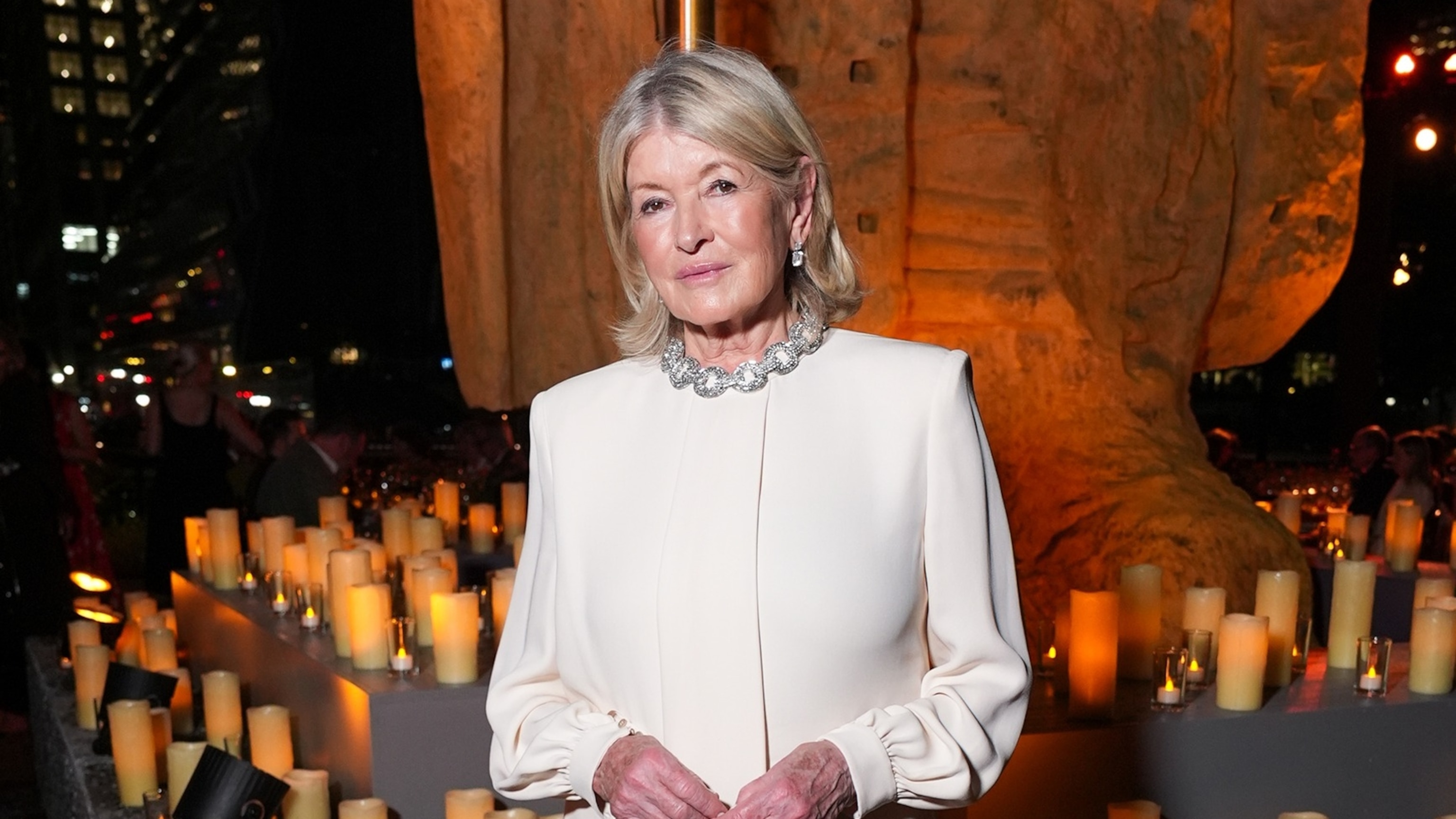
Initially, the 85-year-old lifestyle mogul defended the appearance as a means to generate awareness, but she shared a more comprehensive apology hours afterward, admitting that her first reply had missed the mark.
Martha Stewart has apologized for dressing as a homeless person for Halloween, reversing course within hours of a first statement in which she described the costume as an attempt to draw attention to homelessness.
In a message posted to Instagram on Sunday, Nov. 1, the 85-year-old businesswoman said her earlier explanation had not gone far enough and called the costume insensitive and unfunny. “It’s hard to admit when you’ve really screwed up,” she wrote, adding that she knows many people are struggling financially and that she was very sorry.
The apology capped a weekend of criticism that began with a since-deleted Instagram post and grew after her first attempt to explain it.
A costume shared in a candle promotion
The image showed Stewart in torn jeans, a dark knit hat and a cardigan, with smudges of dark makeup across her face, holding a sign saying she was hungry and asking for help. It appeared on her Instagram account as part of a post promoting her candles. According to the PA news agency, as published by RTÉ, the caption pitched her QVC candles as a good fit for Halloween.
Combining a destitute-themed costume with a brand promotion sparked a significant wave of outrage. Based on a Newsweek overview of the public response, individuals on X slammed the upload as insensitive and oblivious, with multiple users highlighting the high volume of Americans struggling with housing insecurity. Conversely, Men’s Journal noted that supporters came to Stewart’s defense, claiming that detractors were blowing a simple Halloween outfit entirely out of proportion. As the criticism intensified, the publication was deleted, and Stewart restricted the comment sections on several of her remaining uploads.
A first statement that stopped short of an apology
Before the apology, Stewart addressed the controversy in comments to Page Six. She said she was distressed that the costume had offended people, insisted that had never been her intention and said the idea was to raise awareness of homelessness. She also said she has supported charities that work on the issue, though she did not name them.
That explanation did little to settle critics, who questioned how a costume shared alongside merchandise could double as advocacy. Stewart repeated the point in comments under a Just Jared Instagram post, saying the outfit was meant to bring hunger and homelessness to mind but that she had not explained it well, Newsweek reported. Actor Indya Moore pushed back there, arguing that Halloween is not the moment to dress up as people living through a crisis. Hours later, Stewart published the second message, acknowledging directly that her earlier statement had been inadequate.
CNN, which covered the apology on Monday, stated that Stewart’s representatives had been reached for a statement. Newsweek noted that inquiries had been sent to her spokesperson, alongside the National Alliance to End Homelessness, the National Coalition for the Homeless, and the Coalition for the Homeless, while replies remained pending. By Monday, prominent media organizations covering the incident had failed to publish any public statement from homelessness advocacy organizations.
Why the costume struck a nerve
The criticism landed against a backdrop of persistently high homelessness in the United States. The Department of Housing and Urban Development’s latest annual one-night count found 745,652 people experiencing homelessness in 2025, according to a Congressional Research Service summary of the agency’s report, which was released in May. That was a slight drop from the record 771,480 counted in 2024. More than 266,000 of the people counted in 2025 were unsheltered on the night of the survey.
Costumes that turn vulnerable or marginalized groups into dress-up have drawn repeated scrutiny. In August, Target apologized and pulled a clown costume from its shelves after critics said it evoked blackface and minstrel-show imagery.
Stewart’s case attracted notable focus due to her prominent status. During the 1980s, she established her reputation as an expert in gastronomy, hosting, and domestic arts, subsequently debuting Martha Stewart Living magazine in 1990 and earning numerous Daytime Emmy Awards. Although a 2004 conviction for making false statements regarding a stock transaction resulted in a five-month incarceration, her professional journey persevered; furthermore, she has recently developed a lighthearted and frequently provocative digital footprint that has previously sparked controversy.
A long Halloween tradition
Halloween has been part of Stewart’s brand for decades. She has staged elaborate costumes over the years and features them in her magazine’s annual Halloween coverage. In 2024 she appeared on the cover of that issue as Queen Elizabeth I, in a gold gown, a white lace ruff and a crown, carrying an orb and scepter that were in fact a holiday ornament and a curtain rod, according to Marie Claire. Her editors used the look to dub her the “Queen of Halloween.”
Newsweek highlighted that she has likewise posted nostalgic snapshots of prior ensembles, featuring a spooky horsewoman dating back to 2009 alongside a disguise donned for Bette Midler’s 1998 Hulaween celebration. Furthermore, she has recounted adorning her farm’s entrance annually and distributing an assortment of sweets paired with a small monetary gift to neighborhood trick-or-treaters.
That history helps clarify why this year’s outfit fell so flat among a large portion of her fanbase. Typically centered on artistry, imagination, and grandeur, Stewart’s Halloween shares took a different turn this time by casting a genuine and widespread struggle in the part of a persona while simultaneously tying it to a promotional push.
As of Monday, the original image remained deleted, and Stewart had not indicated whether she intends to issue any additional response, such as identifying the charities she mentioned in her initial statement.