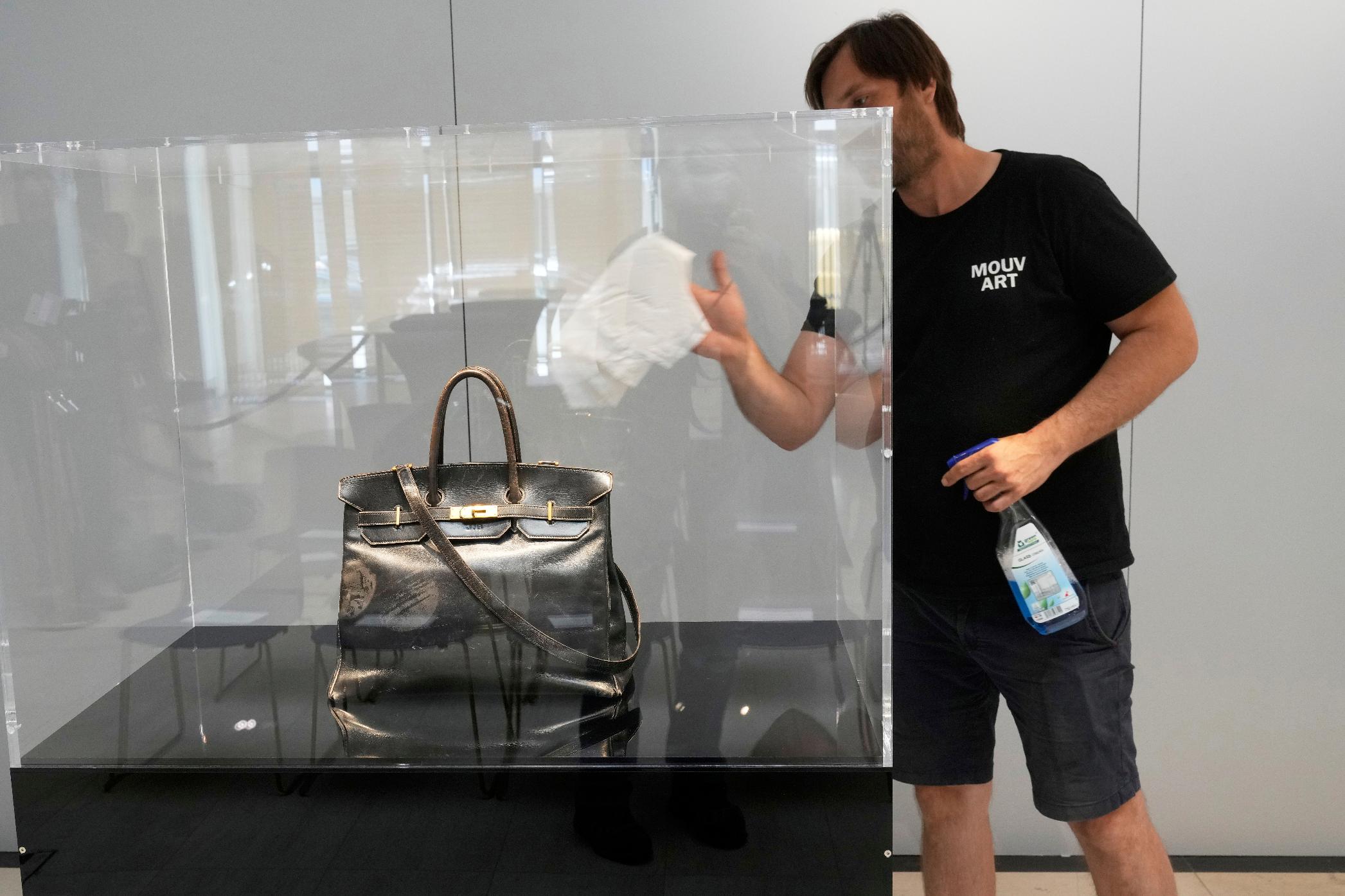
In a moment that has mesmerized fashion enthusiasts, celebrity aficionados, and fans of luxury items, the initial Hermès handbag once owned by the late Anglo-French actress and musician Jane Birkin has been auctioned for a remarkable $10 million. This incredible transaction not only establishes a new milestone as the priciest handbag ever auctioned but also underscores the lasting impact of Birkin’s heritage and the symbolic importance of the bag named after her.
Jane Birkin, known for her chic style and cultural impact, became a symbol of fashion on both sides of the English Channel. She is inseparably associated with the renowned Hermès Birkin bag, one of the most sought-after luxury items globally. The story of this handbag began with a chance meeting between Birkin and Jean-Louis Dumas, the former head of Hermès, during a flight in the early 1980s. Due to her dissatisfaction with the functionality of typical handbags for a busy mother, Birkin drew her vision for an ideal bag, which inspired the creation of the iconic design.
The particular bag that recently went under the hammer was not just any Birkin—it was Jane Birkin’s personal handbag, which she carried and used for years. This unique connection to the woman who inspired its creation imbued the item with an aura of authenticity, history, and celebrity that proved irresistible to collectors and fashion enthusiasts alike. The final sale price of $10 million surpassed all expectations, underscoring the cultural and monetary value attached to items with such rare provenance.
The event drew international interest, as bidders including collectors, investors, and fashion brands fiercely competed for the chance to acquire a piece of fashion history. Although luxury handbags often achieve considerable sums at auction, with unique Hermès pieces like the Himalayan Birkin consistently reaching six-figure amounts, this particular sale represents a notably higher level of prestige and importance.
The unprecedented price can be linked to multiple elements beyond the bag’s connection to Jane Birkin. The Birkin bag has been considered for an extended period as the pinnacle of elegance, artistry, and rarity. Every Birkin is handmade by expert craftsmen using premium leathers, with careful attention to particulars that embody Hermès’ tradition of quality. Having a Birkin has turned into not only a chic proclamation but also a mark of prestige, with queues for new bags frequently extending over several years.
Nonetheless, this specific purse’s worth was increased due to its close connection to Birkin’s individual narrative. In contrast to immaculate, untouched purses stored securely in collectors’ vaults, Birkin was known for using her handbags honestly. She decorated them with decals, keychains, and charms, permitting them to age and gain character over time. This manner made her Birkins distinctly personal and gave them a distinctive character that differentiated them from the pristine luxury products typically tied to the brand.
The handbag sold at auction bore the marks of this authenticity. Signs of wear, personalization, and years of use told a story of a life lived fully and without artifice—a reflection of Birkin herself, who was admired for her authenticity, charm, and understated glamour. It is this sense of genuine connection that likely resonated with bidders, making the bag not merely an object of luxury, but a tangible link to a cultural icon.
Jane Birkin’s influence extends far beyond the handbag that carries her name. Her effortless style, often described as the epitome of French chic, has inspired generations of fashion lovers and designers. With her tousled hair, minimal makeup, and androgynous yet feminine wardrobe, she personified a relaxed but sophisticated aesthetic that continues to inform modern fashion trends.
Her partnership with Hermès, though informal, has left a lasting mark on the luxury world. The Birkin bag, originally designed as a practical solution for her busy lifestyle, has since become one of the most exclusive and expensive handbags in existence. Demand for Birkins has soared over the decades, with rare and exotic versions commanding astronomical prices on both the primary and secondary markets.
El reciente acuerdo de venta por $10 millones no solo destaca el atractivo personal de Birkin, sino también el cambio en la percepción de las colecciones de moda como activos de inversión viables. En los últimos años, personas con altos patrimonios y firmas de inversión han comenzado a considerar bolsos de lujo, relojes y zapatillas raras como inversiones alternativas. A diferencia de las acciones o bonos, estos activos tangibles poseen tanto un atractivo estético como el potencial de apreciación significativa en valor, especialmente cuando están asociados a hitos culturales o históricos.
Auction houses have reported a growing trend in the value of luxury goods, with certain Hermès bags appreciating faster than traditional assets like gold or real estate. The sale of Jane Birkin’s personal bag reflects this shift, where fashion intersects with investment strategy, and where the story behind an object can exponentially increase its market worth.
The sale also raises interesting questions about the role of celebrity in shaping the desirability of consumer goods. While the Birkin bag was already one of the most sought-after luxury items, its direct association with the woman who inspired it elevated its status to something far beyond material value. This is not unlike the way items once owned by cultural icons such as Marilyn Monroe, Audrey Hepburn, or Princess Diana continue to command high prices due to their emotional and historical resonance.
For enthusiasts of Jane Birkin, the auction is a touching reminder of her impact on style, tunes, and cinema. Despite her passing in 2023, her legacy endures not only via her creative endeavors but also through the classic elegance she personified. The Birkin bag, in many respects, encapsulates the core of her personal ethos—functional yet graceful, opulent yet simple.
El acuerdo de $10 millones también representa cómo el concepto de valor está evolucionando en el mercado de lujo. En una era donde la sostenibilidad, la artesanía y el contar historias son cada vez más valorados sobre meros símbolos de estatus, los objetos con un relato profundo se están volviendo más atractivos. Un bolso que narra la historia de su portadora—una mujer que redefinió la elegancia casual e inspiró a innumerables diseñadores—tiene una profundidad que trasciende las etiquetas de precio.
The identity of the winning bidder has not been made public, but speculation is rife within fashion circles. Some suggest the bag may find its way into a museum collection dedicated to fashion history, while others believe it could be displayed in a luxury house’s archive or a private collector’s vault. Regardless of its final destination, the bag’s story has now entered a new chapter, one that continues to captivate the imagination of fashion enthusiasts worldwide.
The immense media coverage surrounding the sale has also brought renewed attention to the craftsmanship behind every Hermès bag. Each Birkin takes up to 48 hours to create by hand, with artisans trained for years to perfect their craft. This dedication to quality, coupled with the limited production and high demand, explains why the Birkin remains an enduring symbol of luxury.
Additionally, Jane Birkin herself once conveyed ambivalence towards worldwide fascination with the handbag that carried her name. She was known for casually using her bags, at one time requesting Hermès to take her name off the crocodile-skin models because of her apprehensions concerning animal rights. This intricacy brings an additional dimension to the story—the item being both a significant fashion landmark and a representation of the woman’s individual principles, her campaigning, and her genuineness.
As the luxury market progresses, the sale of this specific Birkin highlights the significance of the narratives associated with objects in determining their value. Ownership extends beyond acquiring a unique item; it involves possessing a fragment of history, a link to a cultural icon, and an artifact that bears emotional significance.
For enthusiasts, buyers, and fans equally, the unprecedented auction of Jane Birkin’s original Hermès purse serves as proof of the lasting charm of classic design, personal narratives, and the impactful influence of fashion. It further indicates that within a fast-paced trend-driven market and large-scale manufacturing, there persists a profound respect for artistry, sincerity, and the stories that items hold over the years.
As Jane Birkin’s legacy continues to influence not only fashion but also the broader cultural landscape, her iconic handbag has cemented its place in history—not just as a luxury item but as a lasting emblem of style, individuality, and the extraordinary life of the woman who inspired it.