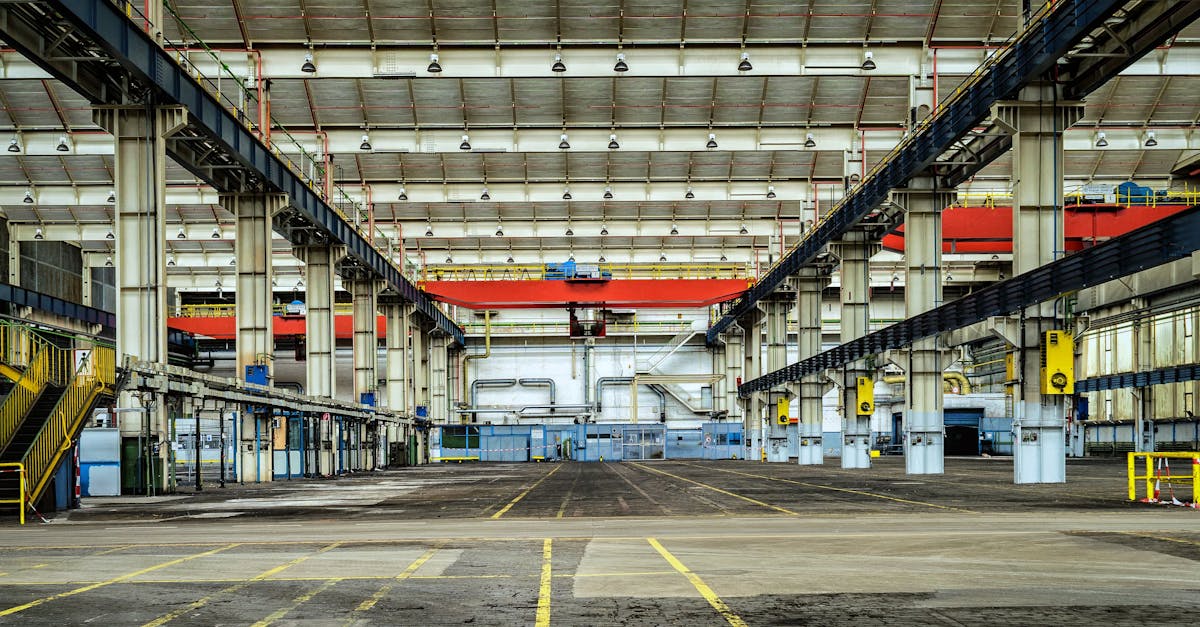
The Czech Republic stands among Central Europe’s most highly industrialized economies, with manufacturing serving as a central driver of production and exports. Positioned in the heart of the European single market, supported by mature industrial clusters and a deep-rooted engineering tradition, it functions as a key hub within Europe’s value chains, particularly across automotive, machinery, electronics, and chemical sectors. Investors consider the country not only for its costs and market reach but also for its ability to integrate effectively into regional and global supply networks, spanning everything from Tier 1 suppliers to major logistics corridors.
Essential structural indicators closely monitored by investors
- Manufacturing intensity: manufacturing constitutes a sizable share of GDP and employment—roughly one quarter to one third of total output—meaning industrial policies and quality of industrial inputs directly affect national performance.
- Export orientation: exports are heavily industrial and concentrated toward the EU, especially Germany. High export-to-GDP ratios signal strong cross-border supplier links and dependability of demand.
- FDI and clustering: the Czech Republic is consistently among the top Central European recipients of greenfield and expansion FDI per capita, particularly in automotive and electronics clusters.
- Labor and productivity: wages are lower than Western Europe but rising; productivity and skill levels are relatively high for the region, supported by technical education and apprenticeship programs.
- Logistics and connectivity: road, rail and air links connect to German seaports and inland logistics hubs; investors consult logistics performance indices and gateway lead times when evaluating sites.
- Regulatory and fiscal framework: relatively stable business environment, EU single-market access, and a competitive corporate tax rate in the neighborhood of 19%—factors that matter for long-term cost forecasting.
- Energy and raw inputs: energy costs and security have become core concerns after recent shocks; planned expansions of nuclear capacity and diversification of suppliers are market-relevant signals.
How investors evaluate the competitive strength of the industrial sector
Investors use a unified checklist that weaves together numerical indicators and subjective assessments, with core components involving:
- Unit labor cost and productivity: investors assess how nominal wage increases stack up against productivity progress, recognizing that enhanced skills and automation can preserve competitiveness even as pay rises.
- Supply-base depth and quality: a robust network of dependable Tier 1 and Tier 2 suppliers shortens lead times and trims inventory expenses, prompting investors to evaluate local supplier concentration, certification standards (IATF, ISO), and export readiness.
- Cluster effects: being close to OEMs and shared suppliers lowers transaction costs and fosters swift issue resolution, with automotive hubs in Mlada Boleslav, Nošovice and Kolin remaining prominent attractions.
- Logistics performance and time-to-market: factors such as road and rail transit durations to German ports, customs handling efficiency, and warehouse availability shape working-capital demands and influence just-in-time feasibility.
- Regulatory predictability and permitting speed: investors review planning schedules, environmental approval processes, and labor law consistency to gauge potential ramp-up risks.
- Access to talent and training systems: the quality of technical universities, vocational institutions, and tailored training programs significantly affects productivity and supports the expansion of advanced manufacturing.
- Innovation and digitalization: the deployment of Industry 4.0 solutions, local R&D activity, and supplier digital maturity help determine a site’s ability to climb the value chain.
- Energy security and sustainability: energy costs, system reliability, and decarbonization strategies such as electrification or on-site renewables have become essential investment considerations that influence overall ownership costs.
- Political and macro stability: exchange-rate movements, broader macroeconomic policy, and geopolitical dependencies, including reliance on specific external suppliers, are thoroughly scenario-tested.
Practical supply‑chain integration across sectors and illustrative examples
- Automotive: Skoda (part of a major German OEM group) anchors a dense network of metalworks, plastics and electronics suppliers. The existence of large OEMs reduces sourcing risk for component makers and creates second-order investment opportunities (tooling, test labs, logistics).
- Electronics and precision engineering: contract manufacturers and specialized component firms integrate with EU and Asian supply flows; co-location with electronics assemblers shortens repair and rework loops.
- Chemicals and industrial inputs: producers of intermediate chemicals and coatings benefit from regional demand and proximity to downstream manufacturers, enabling just-in-time batching and small-batch customization.
- Cross-border value chains: high trade intensity with Germany, Poland and Slovakia creates multi-country production footprints; investors assess customs procedures, rules of origin for tariffs, and logistical corridors connecting plants and ports.
Practical measures investors use to quantify integration and resilience
- Supplier mapping and spend analysis: determine the share of domestic versus imported inputs by both value and component criticality, and assess exposure to single-source dependencies.
- Lead-time models: model transport‑corridor disturbances (for instance, a 48‑hour rail holdup en route to a German hub) to gauge required inventory levels and working‑capital buffers.
- Scenario stress tests: evaluate the impact of energy‑price spikes, raw‑material bans, and workforce shortages to quantify margin pressures and potential contingency outlays.
- Network optimization: assess relocation options or dual‑sourcing within CEE to reduce latency and trim the cost of serving key EU markets.
- Certification and digital readiness: review supplier quality frameworks and ERP/EDI maturity to judge alignment with automated ordering and just‑in‑sequence workflows.
Limitations and risk factors that lower investor evaluations
- Rising wages and skill shortages: as competition for technicians grows, the wage gap to Western Europe narrows and labor availability can constrain scaling without automation.
- Energy volatility: reliance on imported fuels or exposure to regional price spikes raises hedging and operational costs.
- Overreliance on a few export partners: heavy dependence on Germany or single OEMs concentrates demand risk and can amplify local downturns.
- Regulatory or permitting delays: slow approvals for factory expansions, environmental permits or infrastructure projects increase time-to-market and capex durations.
- Logistics bottlenecks: seasonal congestion at key corridors and limited capacity in multimodal hubs can force higher inventories or freight premiums.
Policy levers and incentives shaping investor decisions
- Investment incentives and industrial zones: government-supported districts, fiscal aid, and tax breaks help cut upfront capital needs and can speed up greenfield development.
- Workforce development programs: collaborative training initiatives and subsidized apprenticeships are implemented to enhance the skills of local workers in advanced manufacturing.
- R&D supports and tax credits: benefits targeting innovation, automation, and energy‑efficient upgrades shape location decisions for higher-value operations.
- EU single-market and cohesion funds: EU-backed financing for infrastructure and cross-border initiatives strengthens regional supply‑chain integration.
Practical case analyses and sample scenarios
- Skoda and the automotive supplier network: Skoda’s broad footprint and its enduring relationship with a major German OEM group have drawn Tier 1 suppliers specializing in electronics, seating systems and drivetrain parts. Investors appreciate the established supplier ecosystem, which shortens the ramp-up period for new modules and strengthens opportunities for sourcing within the region.
- Hyundai in Nosovice: a leading manufacturer whose facility coordinates closely with regional suppliers and relies on multiple logistics corridors to reach European markets. The plant illustrates how foreign OEMs foster integrated ecosystems that enhance the skills of local suppliers and reinforce export-focused operations.
- Electronics contract manufacturers: firms operating in Czech plants can support EU customers with rapid turnaround times, taking advantage of stable energy supply and strong digital infrastructure while using local engineering expertise for prototyping and limited-series production.
Investor checklist: applying the judgment framework to the Czech context
- Chart supplier concentration and operational strength across a 200–500 km procurement radius, while estimating exposure linked to single-source dependencies.
- Simulate the full landed cost for core European clients by incorporating freight, inventory holding and tariff impacts across multiple disruption conditions.
- Review nearby logistics assets (inland ports, rail–truck transfer points, bonded storage) to determine capacity and overall robustness.
- Analyze talent pipelines, considering vocational institutions, university engineering output and local recruitment patterns for critical positions.
- Examine energy procurement agreements and fallback measures, including on-site generation and demand‑response strategies to cushion peak‑price exposure.
- Integrate regulatory lead times and municipal backing for permits and infrastructure hookups into planning.
- Prepare to enhance supplier digital competencies to support just‑in‑sequence ordering and minimize transactional bottlenecks.
The Czech Republic offers a strategic location, established industrial clusters and dependable access to European markets, which together make it appealing to manufacturing-focused investors. While labor costs remain competitive, rising wages now compel investors to prioritize productivity improvements, automation and supplier reliability over simple wage gaps. Supply-chain integration is most effective in clusters with extensive, certified supplier networks and consistent logistics routes to Germany and EU ports. Investors who methodically assess supplier concentration, logistics timelines, energy vulnerabilities and workforce development—and who work closely with local incentive programs and training institutions—are best equipped to transform Czech manufacturing capabilities into durable, higher-value operations.