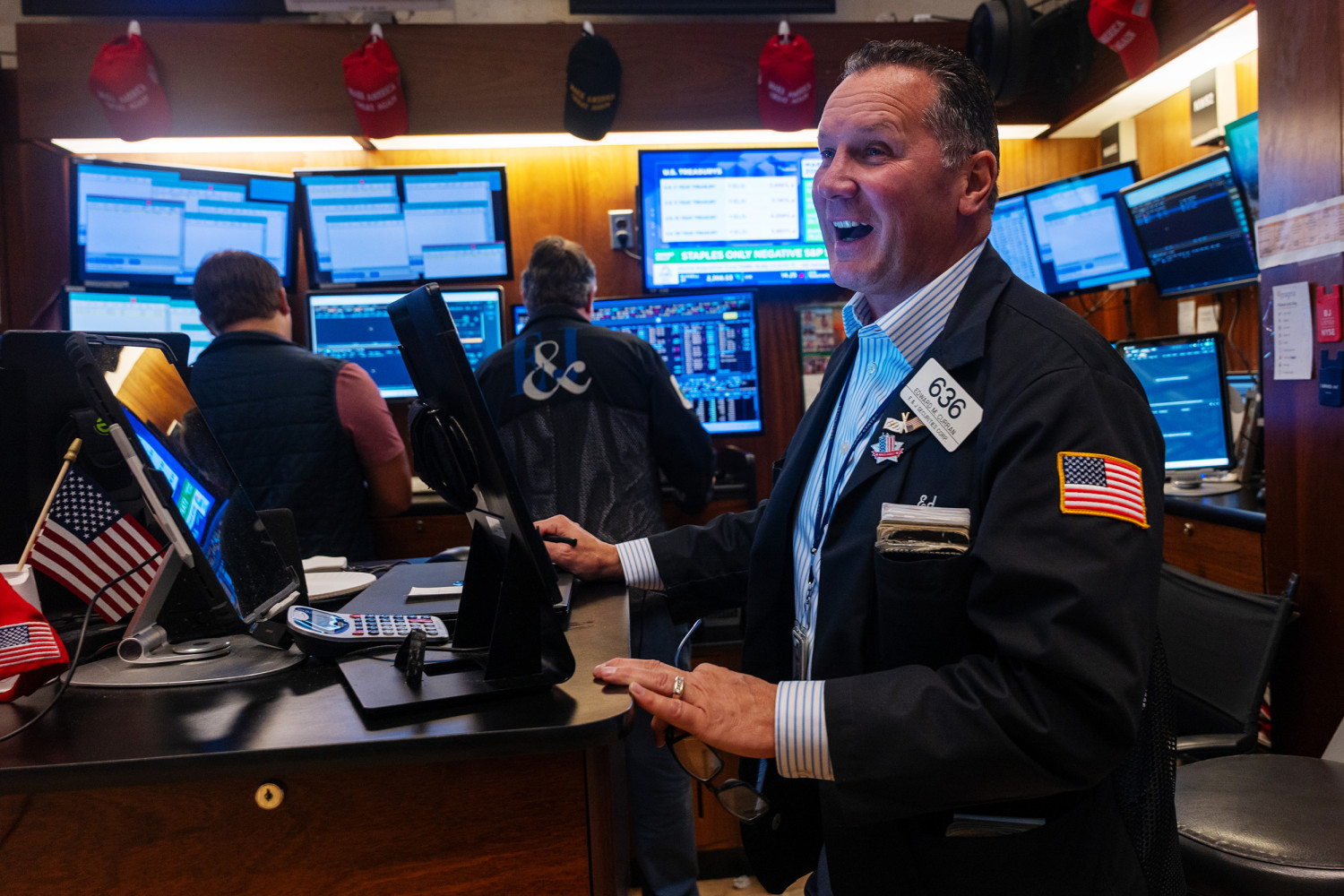
In the face of economic instability, the stock market consistently demonstrates unexpected vigor and stability, contrary to predictions, thereby retaining the trust of investors worldwide.
The surprising resilience of the stock market
In recent months, financial analysts and investors have been observing a remarkable phenomenon: the persistent stability and even growth of the stock market amid widespread economic volatility. Inflation, rising interest rates, and geopolitical tensions have created a complex environment that would normally lead to significant declines in equity values. Yet, the markets have demonstrated a level of endurance that few anticipated. This resilience reflects not only investor optimism but also the adaptability of global corporations navigating through challenging conditions.
The equity market’s results are frequently perceived as an indicator of the overall economy’s condition. In the past, economic unpredictability usually caused more reserved investment strategies, reduced business expenditures, and an inclination towards more secure assets like bonds or gold. Nevertheless, the current direction contradicts these historical behaviors. Key benchmarks, including the S&P 500, Dow Jones Industrial Average, and Nasdaq, have experienced continuous growth, suggesting that investors maintain confidence in the underlying long-term market principles, even amid temporary volatility.
An interpretation of this phenomenon is rooted in the ability of businesses and industries to swiftly adjust to evolving global circumstances. For example, tech companies have harnessed creativity and automation to sustain profits. Meanwhile, energy and healthcare sectors persist in drawing investor attention because of their critical functions in both advanced and new markets.
Elementos que fomentan el optimismo en el mercado
Another key factor behind the stock market’s strength is the influx of individual investors who have entered the market over the past few years. The democratization of investing—fueled by online platforms and mobile trading apps—has changed the landscape of global finance. Retail investors now play a more prominent role, often focusing on long-term gains rather than short-term fluctuations. Their participation has helped maintain trading volumes and liquidity even when institutional investors adopt more conservative strategies.
Additionally, corporations have shown strong earnings reports despite higher operational costs. Many companies have successfully adjusted pricing strategies, streamlined supply chains, and adopted cost-saving technologies to preserve profitability. These strategic responses have reinforced investor confidence, suggesting that the market’s resilience is grounded in tangible financial performance rather than mere speculation.
Monetary policy has also played a critical role. Although central banks around the world have implemented tighter measures to control inflation, their cautious approach to interest rate hikes has helped avoid abrupt shocks to the market. The balance between curbing inflation and supporting economic growth has been delicate but effective, preventing panic-driven sell-offs and ensuring that liquidity remains accessible to investors and businesses alike.
The balance between risk and reward
Despite this optimism, experts caution that the current environment still demands careful navigation. The coexistence of market growth and economic uncertainty means that investors must remain vigilant. Diversification, strategic asset allocation, and a long-term perspective have become more important than ever. While the stock market continues to provide opportunities, volatility remains a constant risk that cannot be ignored.
One of the most striking features of this period is how quickly sentiment can shift. A single geopolitical event, unexpected policy announcement, or disappointing earnings report can lead to sharp market reactions. The speed of information dissemination through digital platforms amplifies these movements, forcing investors to react faster than in previous decades. This rapid cycle of reaction and adjustment has become part of the market’s new normal, blending unpredictability with resilience.
Para los inversores a largo plazo, este contexto resalta la importancia de la paciencia y la capacidad de ver el panorama completo. Las fluctuaciones del mercado a corto plazo pueden parecer preocupantes, pero la historia ha demostrado repetidamente que los mercados tienden a recuperar y crecer con el tiempo. Aquellos que se concentran en activos de calidad, fundamentos consistentes y una estrategia de inversión disciplinada suelen estar mejor preparados para afrontar la incertidumbre y aprovechar las recuperaciones eventuales.
A cautious but confident outlook
Looking forward, many analysts expect the market’s momentum to continue, albeit at a slower pace. Economic headwinds remain—ranging from global supply chain challenges to shifting labor dynamics—but the overall outlook is cautiously optimistic. Companies that continue to innovate and adapt will likely sustain their market positions, while sectors such as renewable energy, healthcare technology, and digital finance are projected to see sustained growth.
The evolution of investor behavior is also shaping the market’s future. Environmental, social, and governance (ESG) investing has gained significant traction, with more investors prioritizing ethical and sustainable companies. This shift not only reflects changing societal values but also encourages corporations to align profitability with responsibility. As these trends mature, they could redefine what drives long-term market performance.
The stock market’s endurance amid ongoing uncertainty highlights the complex interplay between human behavior, corporate resilience, and economic policy. While risks remain, the continued performance of global equities suggests that confidence in innovation, productivity, and adaptability remains strong. Investors who approach the market with strategic foresight rather than fear are likely to find that even in turbulent times, opportunity persists.
The capacity of the stock market to flourish even amid extensive uncertainty highlights the tenacity of world economies and the progressive approaches of today’s investors. Although obstacles will persist in challenging confidence and stability, the market’s present robustness underscores that flexibility and a forward-looking perspective are crucial assets in the financial sector.