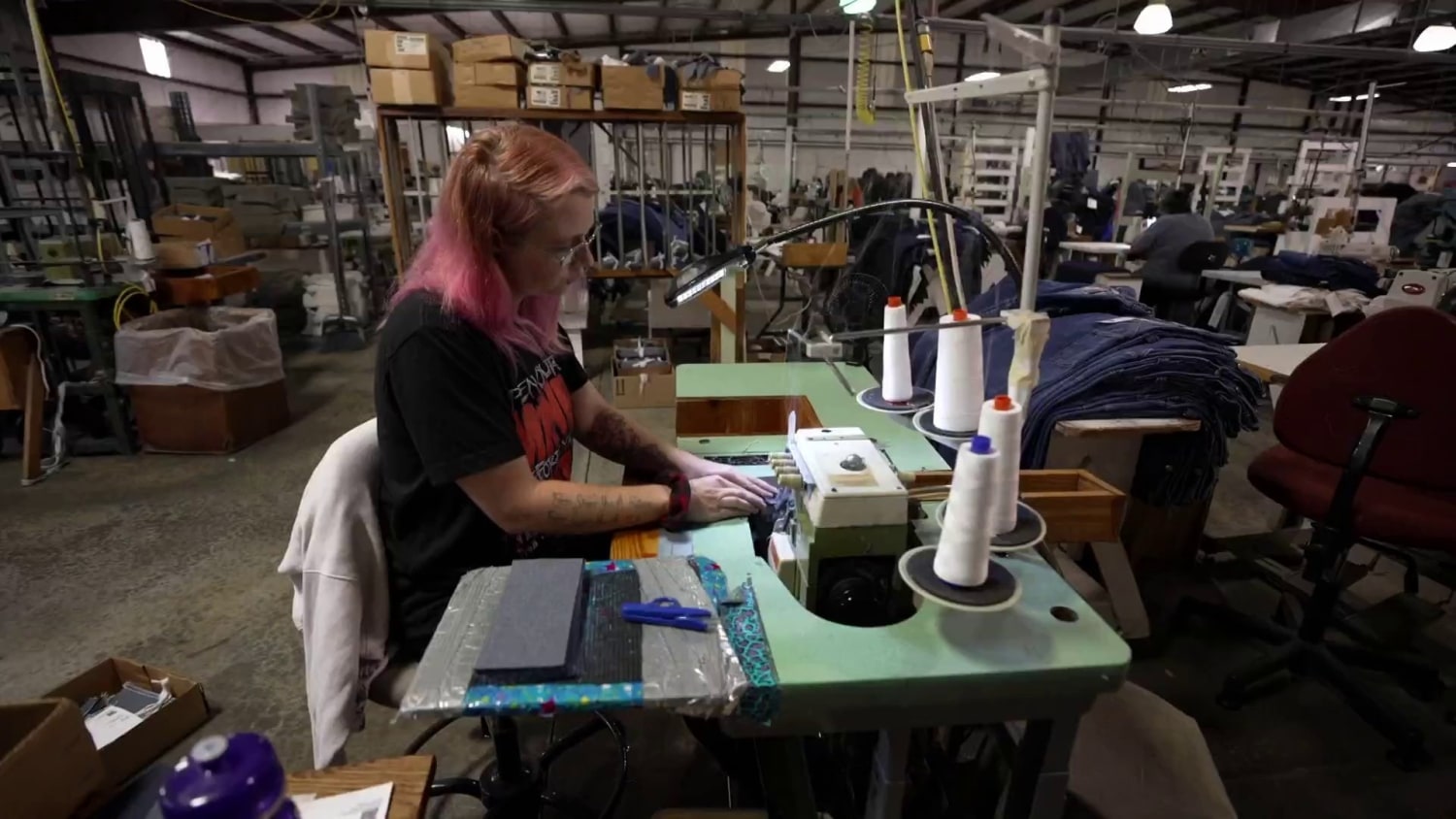
In a globalized world dominated by low-cost manufacturing, one Oklahoma-based company is forging a different path, championing the revival of American-made denim. The company’s mission is a direct response to the widespread decline of the domestic textile industry, which has seen countless factories close and jobs move overseas. This commitment is not merely a business strategy; it is a foundational principle rooted in a belief that quality craftsmanship, ethical production, and support for the local economy can be a viable model in the modern market.
The story of American denim is a complex one, a narrative that intertwines with the nation’s industrial history. For decades, the United States was a global leader in textile and garment manufacturing. Iconic brands were proudly made on American soil, employing thousands of skilled workers. However, starting in the late 20th century, a relentless push for lower costs led many companies to shift their production to other countries, resulting in a dramatic decline of the domestic industry. This Oklahoma-based maker is working to reverse that trend, one pair of jeans at a time.
The founders of the company were driven by a desire to create a product that was both authentic and enduring. They saw an opportunity to re-establish a legacy of American craftsmanship that had been largely lost. Their vision was to build a brand where every step of the process, from the sourcing of raw materials to the final stitch, was done within the United States. This philosophy forms the bedrock of their business model and sets them apart in an industry where “made in America” often refers only to the final assembly, not the entire supply chain.
The firm’s commitment to an entirely local supply chain is fundamental to its character. The production of their jeans starts with unprocessed cotton cultivated in the Southern United States. This cotton is subsequently transformed into yarn and crafted into denim material at a historic mill located in North Carolina, one of the few remaining. Even the tiniest elements, like rivets, buttons, and zippers, are acquired from American vendors. This careful consideration of each part’s source guarantees that the resulting product genuinely embodies its American-crafted pledge.
The manufacturing process itself is a testament to the skill and expertise of American workers. The company employs a team of highly-trained artisans, many of whom have decades of experience in the textile industry. They operate on vintage sewing machines, using traditional techniques that ensure a superior level of quality and durability. This commitment to craftsmanship is a stark contrast to the mass-production factories of the fast fashion world, where speed and quantity often take precedence over quality and precision.
The financial influence of this business model reaches well beyond the confines of the factory. By opting to manufacture locally, the company is generating employment and aiding families in its native Oklahoma. It offers equitable wages, alongside secure and ethical working conditions, a benchmark frequently unmet by foreign manufacturers. This commitment to the local community has a cascading impact, assisting other small enterprises and enhancing the economic vibrancy of the area.
The company’s business model, while noble, is not without its challenges. The cost of labor and materials in the United States is significantly higher than in many other countries. This means their products carry a higher price tag than their mass-produced competitors, which can be a barrier for some consumers. The company must constantly justify its premium price by educating customers on the value of quality, durability, and ethical production. It is a constant battle against a market that is largely driven by price and convenience.
Nevertheless, an increasing portion of the consumer base is looking for products that have a meaningful narrative. These mindful buyers are ready to spend extra on goods that are produced ethically, are eco-friendly, and aid local markets. The Oklahoma denim manufacturer has seized this opportunity, garnering a dedicated customer base that aligns with their principles. Their achievement clearly shows that for a specific group, quality, openness, and an engaging brand narrative hold as much value as the cost.
The company’s story is an inspiring example of the slow fashion movement, a trend that encourages consumers to buy fewer, better-made garments that will last longer. In a world drowning in textile waste, a pair of durable, repairable jeans is a small but meaningful step toward a more sustainable future. This focus on longevity and timeless design is a deliberate counterpoint to the disposable nature of fast fashion, offering consumers a more thoughtful and responsible way to build their wardrobe.
Examining the company’s prospects, their trajectory appears to be favorable. Their approach has shown that a compact, committed team can thrive in a highly contested industry by targeting a segment that appreciates excellence and genuineness. They have established not just a flourishing brand but have also offered an inspiring roadmap for those aiming to rejuvenate American production. Their triumph strongly supports the notion that with enthusiasm, expertise, and dedication to a significant goal, it is feasible to develop a business that is both lucrative and ethical.
This Oklahoma denim-maker’s journey is a compelling narrative of defiance and determination. By choosing to craft every pair of jeans on American soil, they are not just creating a product; they are supporting a community, preserving a tradition, and challenging the status quo. Their success is a beacon of hope for American manufacturing and a powerful reminder that some of the most enduring stories are woven with thread, one stitch at a time.