Science and Technology

The 10 deepest places ever reached by humans ranked by depth and importance

The 10 deepest places ever reached by humans ranked by depth and importance

The 10 Deepest Places Ever Reached by HumansHuman exploration is frequently tied to soaring peaks and the cosmos, although a few of the most remarkable feats have taken place deep beneath the ocean and far under the Earths surface. Ranging from crushing marine trenches to profound subterranean caverns and mines, these sites embody the ultimate boundaries of scientific ambition, engineering, and human resilience. Detailed below are the ten deepest locations ever accessed by mankind, ordered by their depth and importance.1. Challenger Deep, Mariana Trench – Approximately 10,935 meters (35,876 feet)The Challenger Deep is the deepest known point in the world’s…
Read More
The 12 archaeological discoveries that challenged scientific theories

The 12 archaeological discoveries that challenged scientific theories

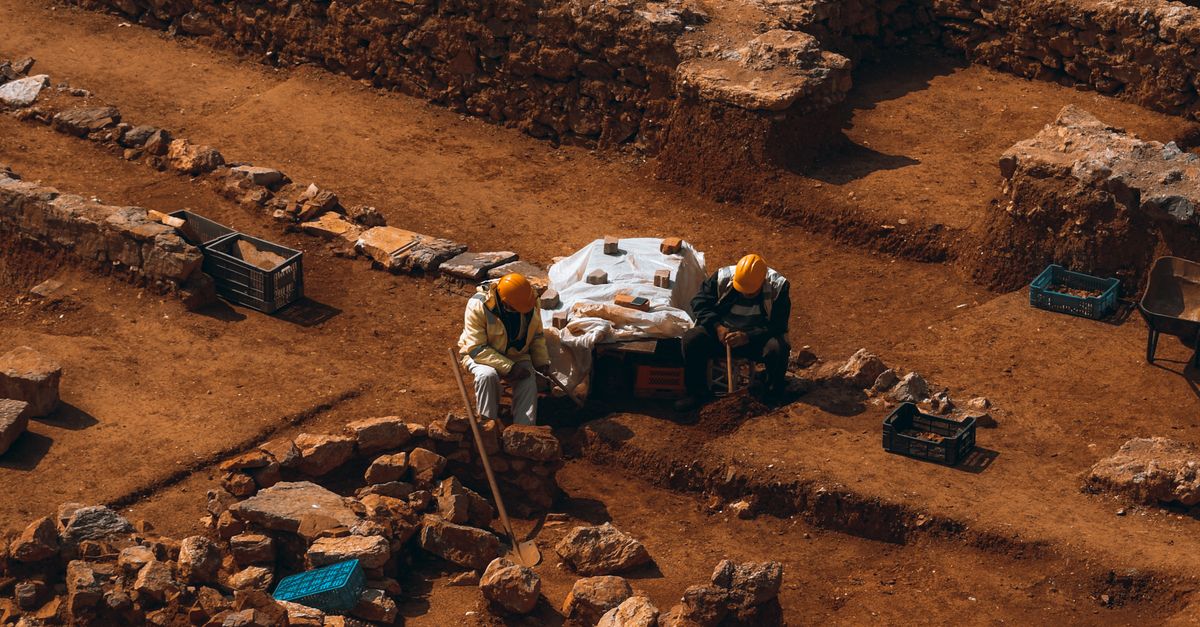
Introduction: When the Past Rewrites ScienceArchaeology does more than unearth ancient artifacts; it reshapes scientific understanding across disciplines—from evolutionary biology and geology to linguistics, medicine, and climate science. Certain discoveries have overturned long-held theories, refined timelines, and revealed unexpected connections between civilizations. The following twelve archaeological discoveries fundamentally changed science by altering how humanity understands its origins, development, and environment.1. The Rosetta Stone (1799)The discovery of the Rosetta Stone in Egypt provided the key to deciphering Egyptian hieroglyphs. Inscribed with the same text in three scripts—hieroglyphic, demotic, and ancient Greek—it allowed scholars, most notably Jean-François Champollion in 1822, to unlock…
Read More
How 12 nuclear and aerospace accidents exposed weaknesses and reformed safety

How 12 nuclear and aerospace accidents exposed weaknesses and reformed safety

Introduction: Catastrophe as a Catalyst for Safer Skies and ReactorsThroughout the twentieth and twenty-first centuries, nuclear and aerospace disasters have exposed systemic weaknesses in technology, management, and regulation. While tragic, these events forced sweeping reforms that reshaped engineering practices, operational oversight, and international safety cooperation. The following twelve nuclear and aerospace accidents fundamentally transformed global safety standards, leaving lasting legacies in risk management, transparency, and technological design.1. Three Mile Island (1979, United States)The partial meltdown at Unit 2 of the Three Mile Island Nuclear Generating Station in Pennsylvania marked the most serious accident in United States commercial nuclear power history.…
Read More
How neural implants are enhancing safety, longevity, and signal stability

How neural implants are enhancing safety, longevity, and signal stability

Comprehending Neural Implants and Their Fundamental ObstaclesNeural implants are devices placed in or on the nervous system to record or stimulate electrical activity. They are used for restoring movement after paralysis, treating Parkinson disease, controlling prosthetic limbs, and exploring brain computer interfaces. Three technical challenges determine whether these systems can move from short trials to widespread clinical use: safety, longevity, and signal stability. Recent progress in materials science, electronics, surgery, and data processing is addressing each of these areas with measurable gains.How Safety Is Being ImprovedSafety centers on reducing harm throughout the implantation process and during extended utilization. Initial brain…
Read More