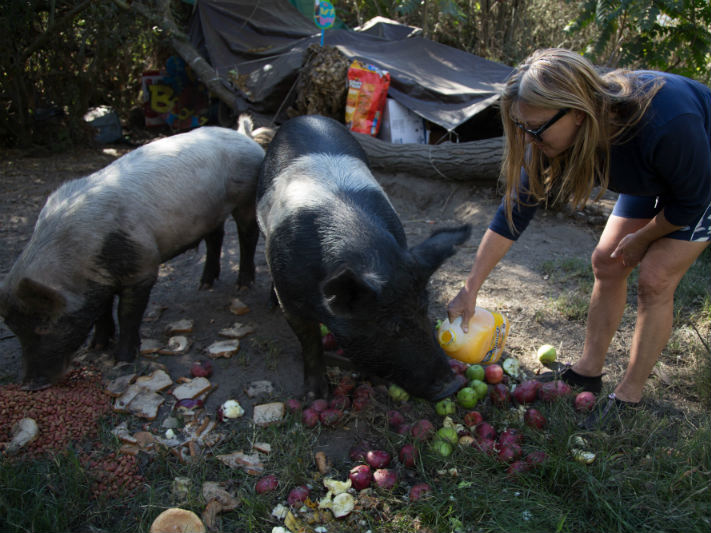
In a secluded area of Mexico, an unusual scientific project is taking place with the goal of enhancing forensic investigations and boosting the nation’s capability to find missing persons. Scientists are employing pig remains dressed in human attire and interred in secret graves to mimic actual scenarios of bodies concealed by criminal organizations. This method, although atypical, is grounded in established forensic principles and is aimed at supplying essential information on decomposition in regional settings.
The initiative, spearheaded by forensic experts and backed by academic organizations along with certain local agencies, tackles a critical national emergency. With numerous individuals missing throughout the nation and many thought to be interred in anonymous graves, the demand for precise and effective recovery techniques is more pressing than ever.
Mexico has been grappling with the ongoing challenge of forced disappearances for decades. According to official data, tens of thousands of individuals remain unaccounted for, many of them presumed to be victims of organized crime. Despite efforts by law enforcement and forensic teams, locating and identifying remains in a country with vast terrain and complex environmental conditions continues to be a formidable task.
A significant challenge in these studies is grasping how human remains break down in various soil types, climatic conditions, and burial situations. Elements such as moisture, heat, garments, burial depth, and the existence of scavengers can influence the speed and characteristics of decomposition. In the absence of region-specific research, forensic teams must depend on broad data that might not match Mexico’s varied environments.
In the field of forensic science, pigs are often utilized as stand-ins for human corpses due to their similar internal anatomy, fat distribution, and skin composition. Conducting decomposition research with pigs provides researchers with important information while avoiding the ethical dilemmas associated with using human remains.
In this examination conducted in Mexico, pigs are clothed in garments akin to what victims likely wore and interred in surroundings that mimic those utilized by criminal organizations trying to hide corpses. Over the course of several weeks and months, researchers observe the remains, investigating how diverse environmental and situational factors affect the decomposition of tissues, bones, and clothing.
The goal is to create a comprehensive database of decomposition patterns specific to the Mexican context. This information can help forensic anthropologists estimate time since death, determine burial methods, and refine the use of detection tools like ground-penetrating radar or cadaver dogs.
The use of animal carcasses in research inevitably raises ethical questions, especially when conducted in sensitive areas. However, the scientists involved in the project emphasize that all procedures are carried out with transparency, regulatory approval, and a focus on public good. The animals are not killed for the experiments but are obtained from farms after natural death or slaughter for food consumption, ensuring that the practice does not promote harm.
Local communities, many of which are deeply affected by the disappearance crisis, have responded with mixed emotions. Some welcome the research as a necessary step toward justice, while others are unsettled by the presence of graves—even simulated ones—in their regions. The researchers work closely with these communities, holding informational meetings to explain the goals and importance of the studies and to answer any questions about the ethical use of animals in science.
The practical applications of this research are already making an impact. Early findings have provided new insights into how quickly clothing deteriorates under various burial conditions, how different fabrics interact with bodily decomposition, and how burial depth influences preservation. This knowledge directly contributes to improving search strategies, especially in cases where time is a critical factor.
For example, forensic groups might now prioritize search zones depending on anticipated states of decomposition or modify the schedule and equipment used during field recovery tasks. The results also aid the creation of educational resources for forensic analysts and volunteers involved in search teams—frequently organized by families of those missing.
Mexico’s missing persons crisis is one of the largest in the world. While government agencies have made commitments to address the issue, limited resources and institutional challenges often slow down progress. In this context, scientific innovation becomes a vital complement to official efforts. By applying forensic science to real-world conditions in Mexico, researchers aim to give investigators the tools they need to be more precise, more efficient, and ultimately, more successful in bringing closure to families.
The study also highlights the importance of collaboration between science and civil society. Families of missing individuals often lead the charge in searches, sometimes uncovering mass graves themselves. These community efforts, combined with advances in forensic science, can create a more coordinated and impactful response to disappearances.
The long-term vision of the project is to build a robust, open-access forensic database that includes decomposition timelines, chemical markers, and soil interaction data tailored to Mexican regions. This resource would support not only local investigators but also international forensic teams working in similar environments.
Moreover, the research is expected to contribute to broader conversations about human rights and the role of science in supporting justice. As the database grows, it may also be used to train new generations of forensic professionals and influence national policy on how missing persons cases are handled.
In a terrain characterized by misfortune and ambiguity, employing pigs in decomposition research might appear unconventional, yet the rationale for this practice is profoundly empathetic. Every interred animal represents progress toward a more precise grasp of methods to locate and recognize those who are missing. For the families seeking closure, each scientific breakthrough offers a glimmer of optimism—optimism that dedication, empathy, and scientific inquiry can join forces to reveal truths hidden beneath the earth.