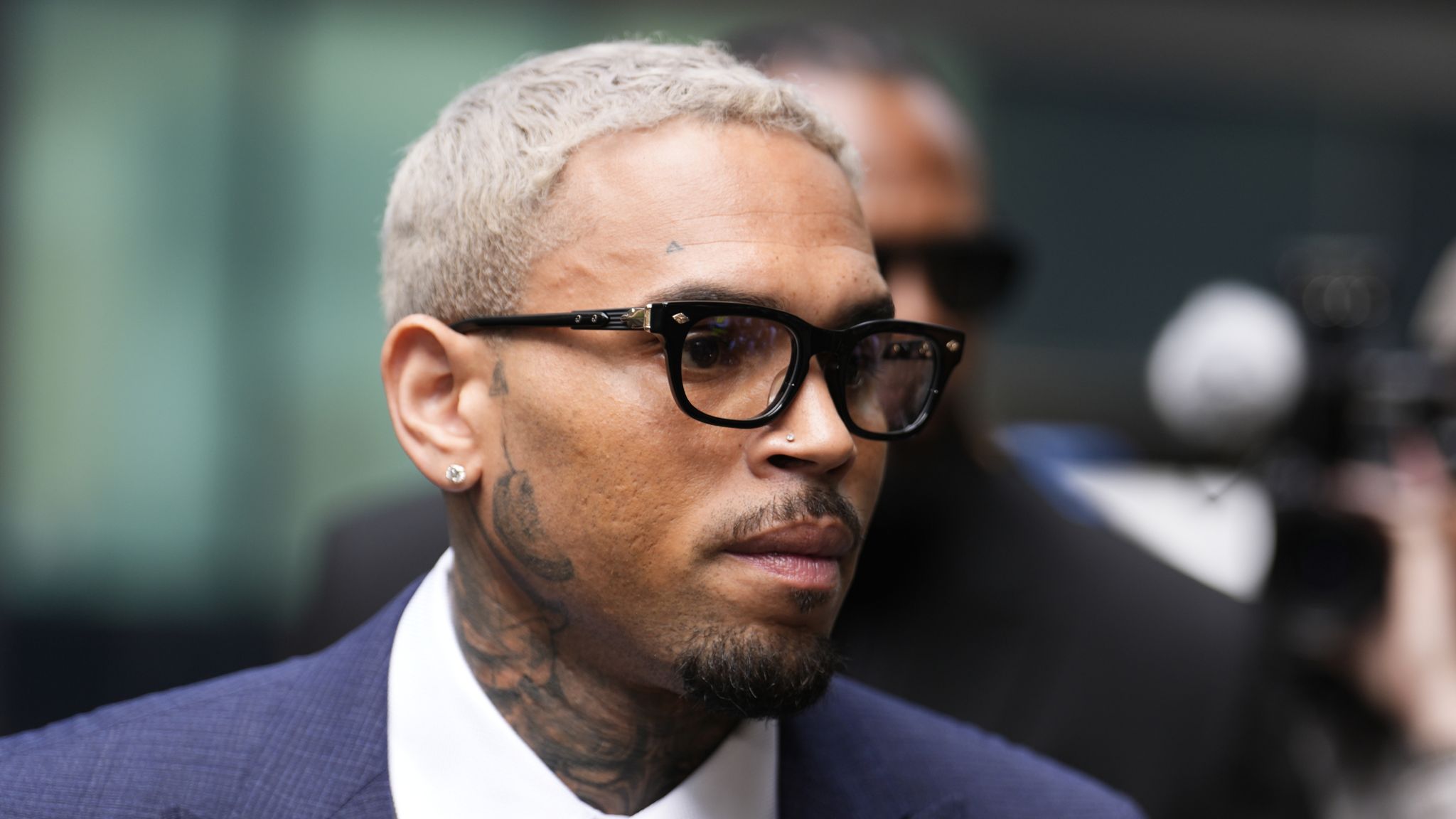
Chris Brown, the famous singer, songwriter, and entertainer, has formally pleaded not guilty to recent assault charges brought against him. This event marks a new chapter in the artist’s legal journey, which has included several instances over the years involving accusations of violence.
The situation at hand pertains to allegations against Brown regarding a dispute that resulted in an assault charge, which led authorities to initiate an investigation and pursue legal proceedings. At a court session recently, Brown’s defense team submitted a plea of not guilty for him, paving the way for additional legal actions as the matter progresses.
Brown, who gained popularity in the mid-2000s with a number of top-charting songs, has been consistently recognized for his musical abilities and examined due to his private life. His interactions with the legal system, especially concerning assault cases, have often captured media coverage, attracting public interest and initiating discussions on celebrity conduct, responsibility, and the intricacies of the justice system when it comes to prominent individuals.
In this specific instance, information is sparse, given that the legal proceedings are just beginning. What has been reported is that prosecutors claim Brown was engaged in a physical altercation resulting in the charges. His legal team insists on his innocence, stating that Brown plans to dispute the accusations and vindicate himself in court.
The case has reignited discussions about the intersection of fame and legal accountability, with many weighing in on social media and in the entertainment press. For some, Brown’s legal troubles are viewed as a continuation of past behavior, while others emphasize the importance of reserving judgment until the court process concludes.
Across his professional journey, Brown has frequently encountered a twofold story: on one side, his successes in music, comprising many accolades, albums that have sold millions, and concerts that sell out; on the other, the persistent backdrop of legal issues that have occasionally jeopardized his career triumphs. His knack for preserving a loyal audience despite these obstacles has been remarkable, emphasizing the intricate dynamics between artists and their fans.
Brown’s legal team has indicated that they are prepared to mount a strong defense against the charges. They have emphasized his commitment to cooperating with authorities while also defending his reputation and personal rights. As with any legal case, the presumption of innocence remains in place until proven otherwise, and Brown’s representatives have urged the public to allow the legal system to run its course without pre-judgment.
The timeline for the case remains uncertain, with additional court dates expected in the coming months. Depending on the outcome of the proceedings, Brown could face significant legal consequences if convicted, though it is too early to predict how the case will ultimately resolve. In the meantime, Brown continues to focus on his music career, with new projects and performances reportedly in the works.
The public response to the news has been varied. Some fans continue to express unwavering support, citing Brown’s artistic contributions and personal growth over the years. Others remain critical, pointing to past incidents as cause for concern and advocating for greater accountability within the entertainment industry.
Brown’s interactions with the judicial system have been extensively covered in the last ten years, most prominently the widely known 2009 incident with fellow musician Rihanna, which led to felony assault accusations and a plea bargain. Since that time, he has encountered several other legal obstacles, some of which have been settled discreetly, while others have unfolded publicly.
These incidents have contributed to an ongoing dialogue about celebrity culture, domestic violence, rehabilitation, and redemption. For some observers, Brown’s continued success in the music industry raises difficult questions about how society balances artistic achievement against personal conduct.
Legal specialists monitoring the ongoing case point out that prominent defendants frequently encounter distinct hurdles in court, especially as media reports and public attention can shape perceptions. Defense lawyers are usually responsible for not just presenting a legal argument but also handling the wider story that develops in the public arena.
For Brown, maintaining focus on his career while addressing legal matters is not new territory. In recent years, he has released several well-received albums and singles, collaborated with other major artists, and toured extensively. His music continues to perform well on streaming platforms and radio, reflecting an enduring popularity that has remained despite his legal troubles.
At the same time, each new allegation brings renewed attention to his past and to the broader issues of violence, accountability, and rehabilitation within the world of entertainment. For some, Brown represents a cautionary tale about the pressures of fame and the consequences of personal decisions. For others, he embodies the possibility of growth and change, despite past mistakes.
As the legal proceedings advance, more details about the case are likely to emerge, offering a clearer picture of the circumstances behind the charges. For now, the focus remains on the courtroom, where Brown’s legal team will continue to defend him, and where the outcome will be determined based on the evidence presented.
No matter how the situation evolves, it acts as a further indication of the intricate connection between famous individuals, the justice system, and society. It also underscores the significance of legal procedures, particularly in prominent cases where public sentiment can be rapid and polarizing.
As Brown’s journey in music remains strong, the persistent legal issues highlight the fact that personal and professional spheres frequently overlap, especially for people in the spotlight. The upcoming months will be crucial as the legal proceedings advance and as Brown manages both his legal challenges and his status in the entertainment sector.
For the moment, Brown remains free as legal proceedings continue, with his not guilty plea marking the formal beginning of what could be a lengthy legal battle. As always, the final outcome will depend on the judicial process and the evidence presented, rather than public speculation or media narratives.
In the meantime, fans, critics, and industry observers will be watching closely, not only to see how the case develops but also to consider its broader implications for the conversation about accountability, rehabilitation, and the power of celebrity in shaping public perception.