Introduction: When Innovation Backfires
Even the most powerful corporations in the world miscalculate. Massive research budgets, elite marketing teams, and global distribution networks do not guarantee success. Some product launches collapse under poor timing, flawed strategy, or simple misunderstanding of consumers. The financial consequences can be staggering—often reaching hundreds of millions or even billions of dollars.
Below are 12 failed products that cost corporations millions, along with the lessons they left behind.
1. New Coke (Coca-Cola)
In 1985, Coca-Cola reformulated its iconic beverage to compete with Pepsi’s sweeter taste. The company invested an estimated $30 million to $50 million in development and marketing.
Consumers reacted with outrage. Coca-Cola underestimated the emotional attachment customers had to the original formula. Within months, the company reintroduced the original recipe as “Coca-Cola Classic.” While the brand ultimately recovered, the episode became one of the most famous marketing failures in history.
Lesson: Brand loyalty is emotional, not just rational.
2. Ford Edsel (Ford Motor Company)
Launched in 1957, the Edsel was positioned as a revolutionary new automobile line. Ford reportedly invested over $250 million (equivalent to billions today).
Poor timing during an economic downturn, a controversial aesthetic, and confusing pricing drove terrible sales figures. Consequently, the Edsel brand was shelved after merely three years.
Lesson: Market research is unable to make up for economic misalignment and fuzzy positioning.
3. Google Glass (Google)
Launched back in 2013, Google Glass aimed to deliver a wearable augmented reality tomorrow. Although total development expenses were never officially revealed, financial analysts calculate that hundreds of millions were poured into research, development, and marketing.
Consumer rejection stemmed from privacy worries, a steep price tag of approximately $1,500, and ambiguous everyday applications. By 2015, the device had been withdrawn from the retail sector.
Lesson: Technological innovation must align with social acceptance and clear everyday value.
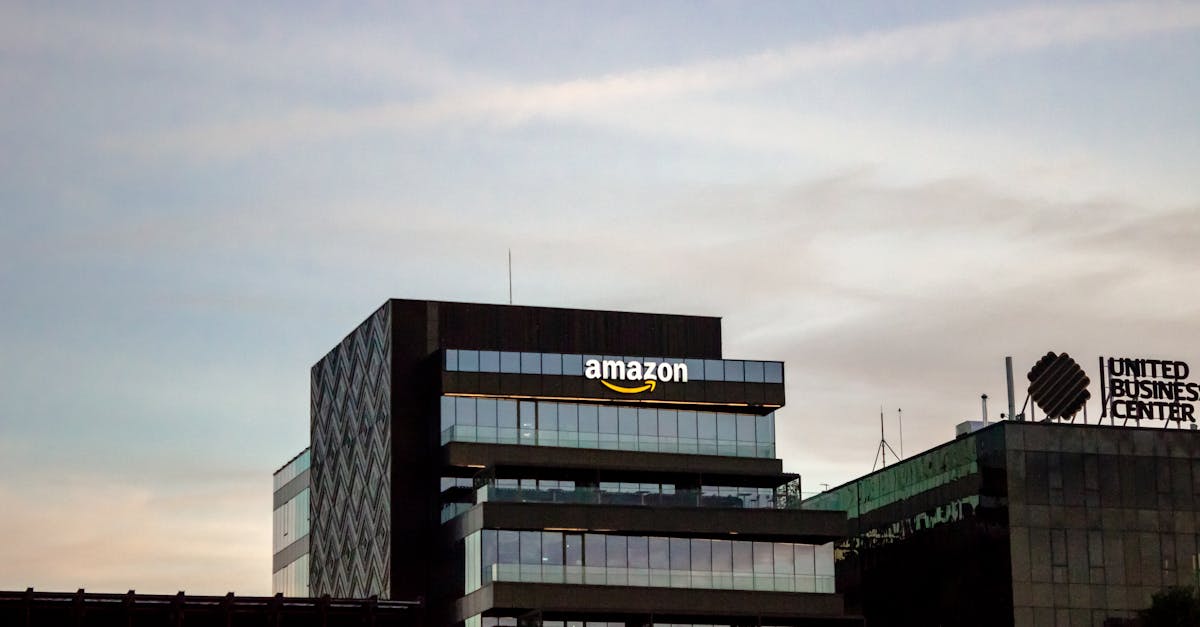
4. Amazon Fire Phone (Amazon)
Launched in 2014, the Fire Phone showcased three-dimensional screen technology alongside extensive Amazon ecosystem integration. It is reported that Amazon suffered losses exceeding over $170 million tied to product development and unsold stock.
The phone lacked app compatibility compared to competitors and failed to differentiate itself meaningfully in a saturated smartphone market.
Lesson: Ecosystem strength alone cannot overcome weak competitive positioning.
5. Quibi (Quibi Holdings)
Quibi launched in 2020 as a short-form streaming platform backed by nearly $1.75 billion in funding. Despite celebrity content and aggressive marketing, it shut down within six months.
Consumers found little reason to pay for short videos when free alternatives were widely available. The platform also restricted viewing to mobile devices at launch, limiting flexibility.
Lesson: Massive funding does not replace clear consumer demand.
6. Microsoft Zune (Microsoft)
Microsoft introduced the Zune in 2006 to compete with Apple’s iPod. Despite significant investment, the device failed to capture meaningful market share.
The Zune arrived in a sector already commanded by Apple’s cohesive ecosystem of hardware, software, and branding. Production of the device ended in 2011.
Lesson: Entering a market leader’s ecosystem late in the game demands radical differentiation.
7. Segway Personal Transporter (Segway Inc.)
The Segway launched in 2001 amid enormous hype. Development reportedly cost over $100 million. Early projections estimated sales of 50,000 to 100,000 units annually.
Sales never approached those figures. High prices, regulatory restrictions, and unclear use cases limited adoption. Segway was eventually discontinued in 2020.
Lesson: Revolutionary design must solve a widespread problem.
8. Samsung Galaxy Note 7 (Samsung)
In 2016, reports emerged that Galaxy Note 7 batteries were catching fire. Samsung initiated a global recall, eventually discontinuing the device.
The recall cost the organization roughly $5 billion in both direct and indirect losses. Although the crisis harmed brand reputation, it simultaneously showcased Samsung’s crisis management capabilities.
Lesson: Quality control failures can outweigh years of brand-building.
9. Crystal Pepsi (PepsiCo)
Introduced back in 1992, Crystal Pepsi was presented as a clear, caffeine-free cola offering a “pure” alternative. Although initial purchases performed well, interest soon dwindled.
Pepsi discontinued the product within two years, absorbing substantial marketing and production losses.
Lesson: Novelty drives curiosity, not necessarily repeat purchases.
10. Juicero (Juicero Inc.)
Juicero launched a $400 Wi-Fi-connected juicer back in 2016. Over $120 million in venture capital was secured by the firm.
Investigative reports revealed that juice packets could be squeezed by hand without the machine. The perceived overengineering and high cost led to public ridicule. The company shut down in 2017.
Lesson: Innovation needs to genuinely enhance convenience or efficiency.
11. HP TouchPad (Hewlett-Packard)
HP launched the TouchPad tablet in 2011 to compete with Apple’s iPad. Weak sales forced HP to discontinue the product within seven weeks of release.
The firm wrote off nearly $885 million associated with the unsuccessful rollout. Heavy price-cutting temporarily boosted revenues, yet it eroded the long-term market standing.
Lesson: Entering a mature market requires ecosystem strength and sustained commitment.
12. Colgate Kitchen Entrees (Colgate-Palmolive)
Colgate attempted to expand into frozen meals in the 1980s. Consumers associated the brand with toothpaste and oral hygiene, not food.
The product failed quickly, demonstrating a costly misunderstanding of brand extension limits.
Lesson: Brand credibility does not automatically transfer across unrelated categories.
Common Causes Behind Expensive Failures
While each case differs, recurring themes emerge:
- Misinterpreting consumer behavior and emotional attachment
- Overestimating demand for technological novelty
- Poor timing within economic or competitive cycles
- Weak differentiation across crowded markets
- Brand misalignment regarding product extensions
- Quality control breakdowns that erode trust
The True Price of Failure
The financial losses are measurable in write-downs, recalls, and unsold inventory. Less visible costs include damaged reputation, lost executive credibility, and reduced investor confidence. Yet failure is also embedded in corporate innovation cycles. Many of the companies listed—Coca-Cola, Apple’s competitors, Samsung, Microsoft, Amazon—continued to thrive after their setbacks.
What distinguishes enduring corporations is not the absence of failure but the ability to absorb losses, adapt strategy, and rebuild trust. These expensive missteps reveal that innovation without alignment—between product, market, brand, and timing—can turn ambition into liability. At the same time, they underscore a paradox of business: bold experimentation creates both spectacular losses and transformative success, and the line between the two is often visible only in hindsight.